
Client Information: Mr. Zhang;
Shipping Route: Moving from Nanjing to Vancouver;
Case Summary: Mr. Zhang from Nanjing is emigrating with his family to Canada and chose to bring all the furniture and belongings from his home in China to Vancouver, Canada for continued use.
Canada has quite a few immigrant cities to choose from, such as Toronto, Ottawa, and Montreal, but the most popular one is still Vancouver. As Canada's third-largest city, Vancouver is a famous Canadian port and also one of the world's most renowned international metropolises, widely recognized as one of the most livable cities globally. Coupled with the large Chinese community there, many people make Vancouver their first choice for settling down.
Mr. Zhang from Nanjing is emigrating with his family to Canada and settling in Vancouver. Having heard that new immigrants can bring personal effects and household goods owned and used at their place of residence for more than six months into Canada duty-free, he chose to bring all the furniture and belongings from his home in China to Canada for his own use. Introduced by a friend, he found Seapoe Relo, and after several exchanges, decided to have Seapoe handle this international move.
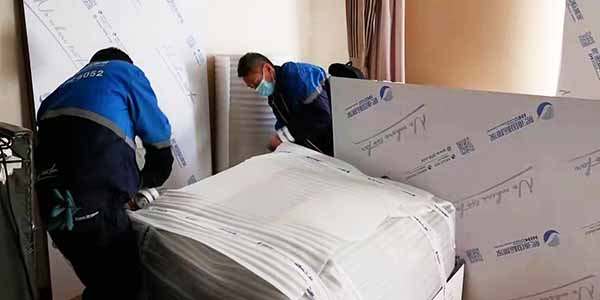
Before the move begins, Seapoe will sign a contract with Mr. Zhang that clearly defines the rights and obligations of both parties. The moving service items and detailed moving costs will all be specified in the contract to ensure the smooth progress of the move. Then, on the scheduled moving day, professional movers arrive with packing materials and carry out fine packing of the items. Every item is handled strictly according to moving standards, and on the outer packaging of each item, labels (room name, fragile) are affixed and the item name is written. The client doesn't need to lift a finger throughout the process—just watch the movers at work. Below is the moving scene on the day: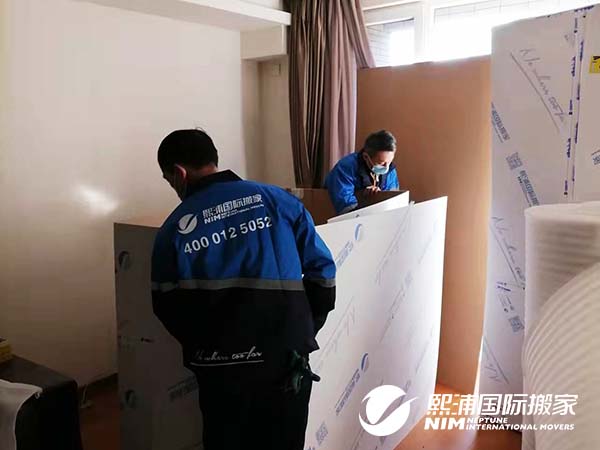
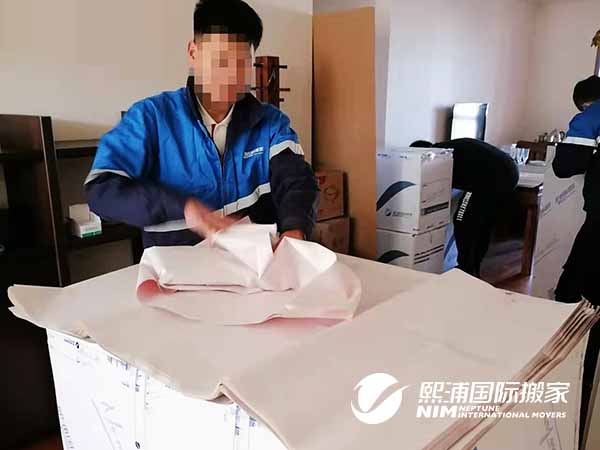
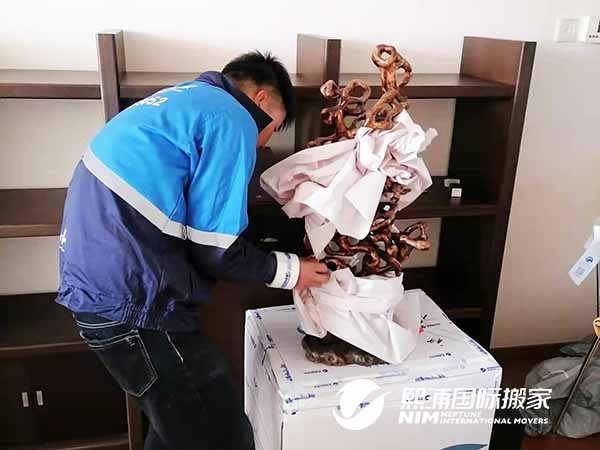
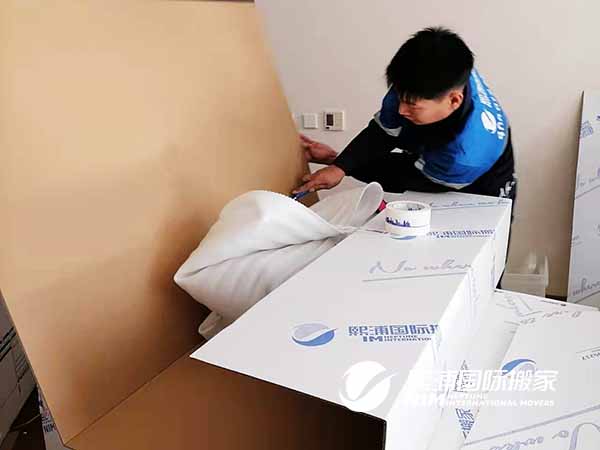
After packing is complete, all items are transported to Seapoe's warehouse for reinforced packaging once more. For fragile items, custom fumigation-free wooden crates are used for protection. Next comes booking and customs declaration, then ocean shipping to Canada for customs clearance. Customs clearance for personal effects in Canada differs from other countries—the person must bring relevant documents in person to the customs office for clearance. The process is simple: just answer relevant questions and confirm that the items belong to you. After customs clearance is completed, delivery to the door follows. Seapoe's door delivery service doesn't just bring items to the doorstep—it also places them in designated rooms according to the client's requirements, helps remove the outer packaging, reassembles items that were disassembled during packing, positions them in place, and finally clears away all the debris generated by the move.
Seapoe's one-stop door-to-door dual-clearance international moving service has dedicated personnel following up on every stage from China to overseas. Any issues can be resolved by contacting your dedicated customer service representative directly, and personalized services are provided according to the client's individual needs, truly achieving a fully managed service with zero operation required from the individual. Moving items are delivered accurately, safely, promptly, and with quality assured, door to door—making moving effortless, hassle-free, and worry-free.
Notes on Moving from China to Vancouver
1. The Canadian government stipulates that new immigrants or citizens residing abroad may bring personal effects and household goods owned and used at their place of residence for more than six months into Canada duty-free. Note that Canadian customs regulations require the consignee to enter Canada before the goods arrive at a Canadian port; unaccompanied baggage (goods arriving later) must be declared to the immigration authorities in advance for approval of duty-free entry.
2. Canadian customs regulations require that when unaccompanied baggage arrives in Canada, the consignee in person must bring relevant documents to undergo a brief interview with a Canadian customs officer. The interview usually ends in about 10 minutes, and the questions are very simple. Documents to prepare: passport, Maple Card (or visa), packing list, unaccompanied baggage list, and ocean bill of lading.
3. Since Canada's economy relies heavily on exports of forestry products, the Canadian government places great importance on the prevention of plant pests and diseases. It strictly stipulates that all wooden products (raw wood packaging must not have tree bark) entering the country must undergo fumigation treatment!
4. The voltage across Canada is 110V, while the most commonly used voltage in China is currently 220V—meaning domestic electrical appliances cannot be used in Canada. If you want to bring appliances over, it is recommended to choose ones with a wide voltage adaptation range when purchasing, such as those currently available on the market that support voltages between 110V and 230V; these can be used normally in Canada.
By quote form, phone, email or WeChat — we reply promptly Get a Quote